Inside a Quantum Computer: Cold Machines, Fragile Qubits and Big Questions
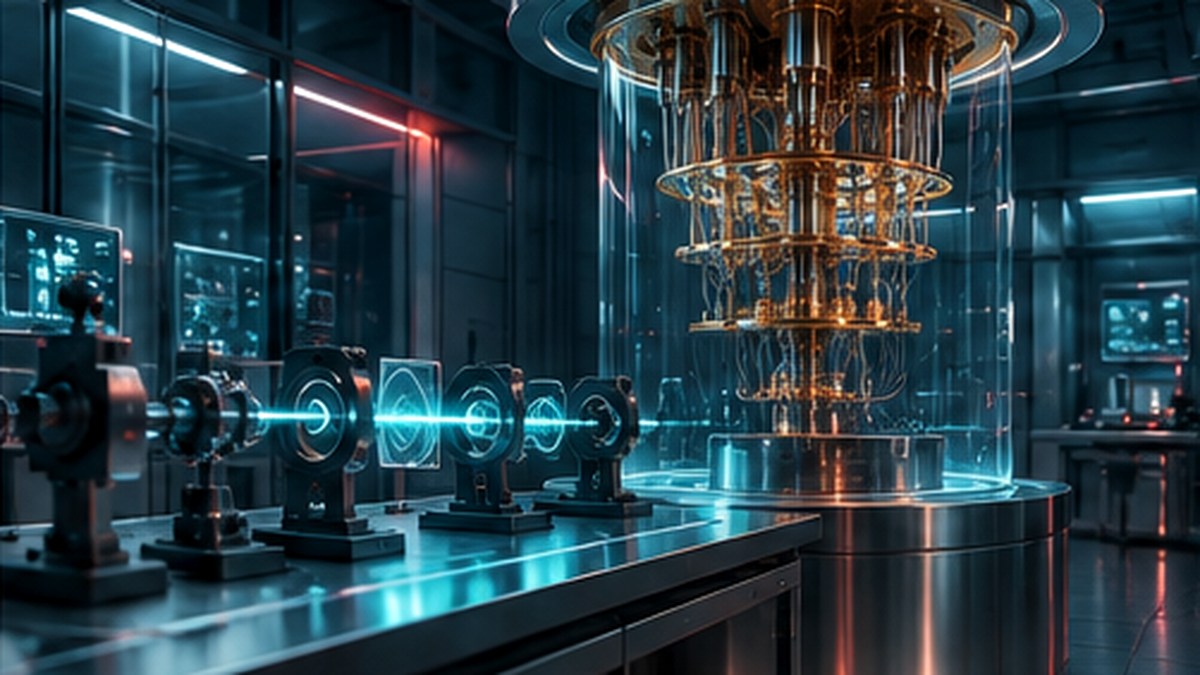
Those golden chandeliers in laboratory photos hint at a very different kind of computing.
Q PHONE CHRONICLES — FICTION / FUTURE-FOCUSED COMMENTARY. This publication combines speculative stories with explanatory technology articles. Fictional scenes, products and payment systems are not verified announcements.
A familiar computer stores information in bits that behave as zeros and ones. A quantum computer works with qubits, systems whose quantum states can be prepared and manipulated in ways that have no simple classical equivalent.

PRESIDENT TRUMP INTRODUCING THE ‘Q’ PHONE
READ FULL STORYThe equipment can look theatrical: shiny metal layers suspended inside a large cooling system, connected by intricate cables. But the engineering is practical. Certain quantum processors need extremely low temperatures to reduce unwanted interactions with their surroundings.
Why the machine is so delicate
A qubit’s state can be disturbed by noise, heat or imperfect controls. Researchers call the loss of useful quantum behavior decoherence. It limits how long a system can preserve the information needed for a calculation.
That is why a single impressive qubit count does not tell the whole story. Error rates, connectivity, control systems and the ability to correct mistakes matter too. Building reliable quantum computers is not just about putting more qubits on a chip.
What quantum computing might be good for
Researchers investigate algorithms that could someday help with certain chemistry, materials and mathematical problems. It is not a universal replacement for laptops or cloud servers. Many ordinary tasks may remain more efficiently handled by classical computers.
Popular headlines sometimes suggest a future quantum computer will instantly crack every password or make every investment prediction perfectly. Neither claim follows from current science. The practical impact will depend on the type of machine, error correction and particular algorithms involved.
A scene from the imagined future
In our fictional 2038 laboratory, a scientist runs a molecular simulation while an ordinary server handles notes, charts and communication. The quantum processor is a specialized instrument—not a magic black box capable of solving any problem on demand.
The story’s most interesting detail is also the realistic one: researchers spend much of their time checking and correcting the machine’s errors. That patient work is how extraordinary technology becomes useful.